Air Conditioner Leaking Water in Bundall
Water leaking from your air conditioner in Bundall usually means a blocked drain or dirty filter, not a broken unit. Air Conditioning Bundall finds the fault fast and stops the drip, backed by 300+ five-star reviews.
What Water Leaking From Your Aircon Means
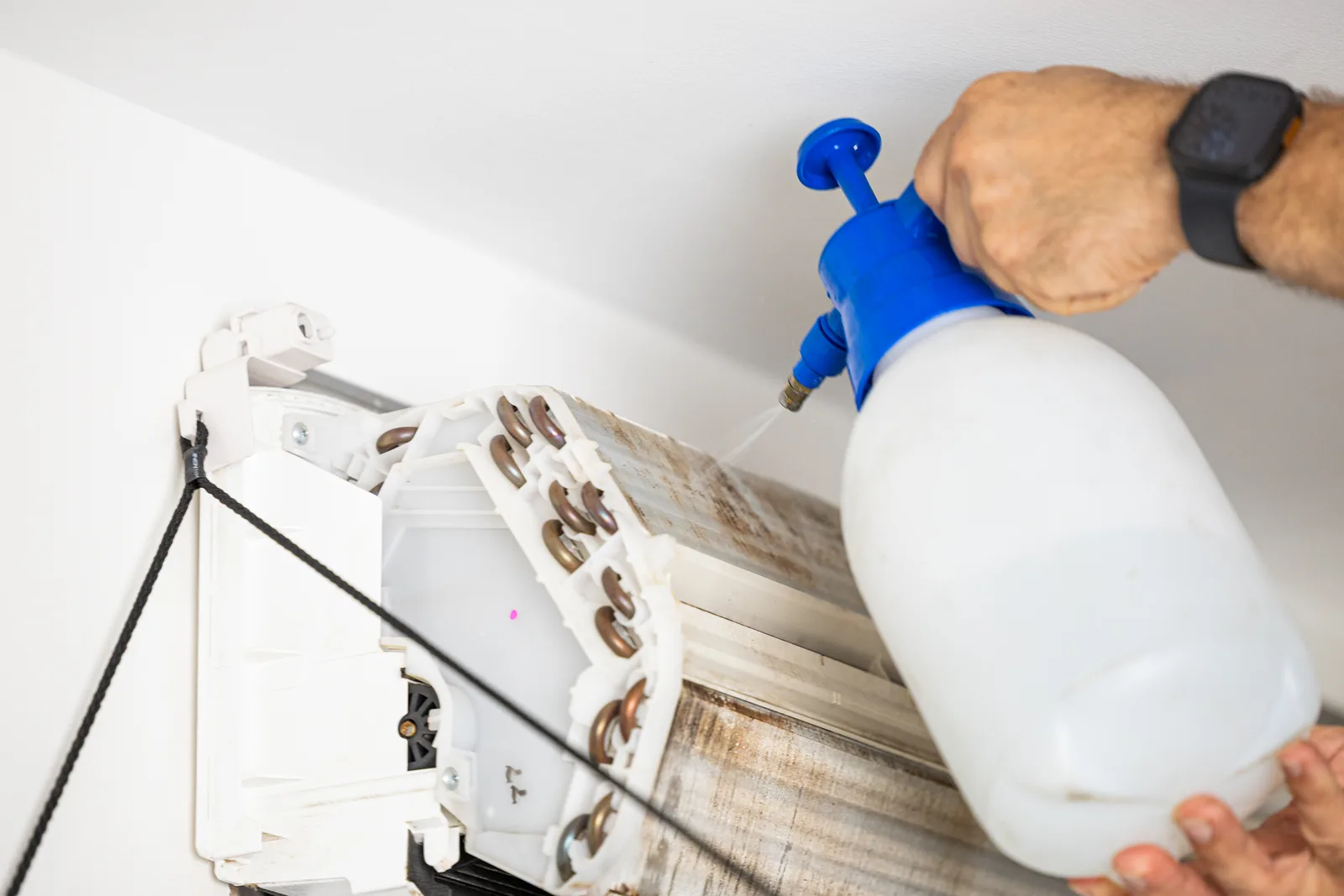
Water dripping from the indoor head or pooling on the floor is almost always a drainage or airflow problem, not a broken unit. A blocked drain line, a dirty filter, or a frozen coil melting can all send water where it should not go. We diagnose it properly rather than guessing.
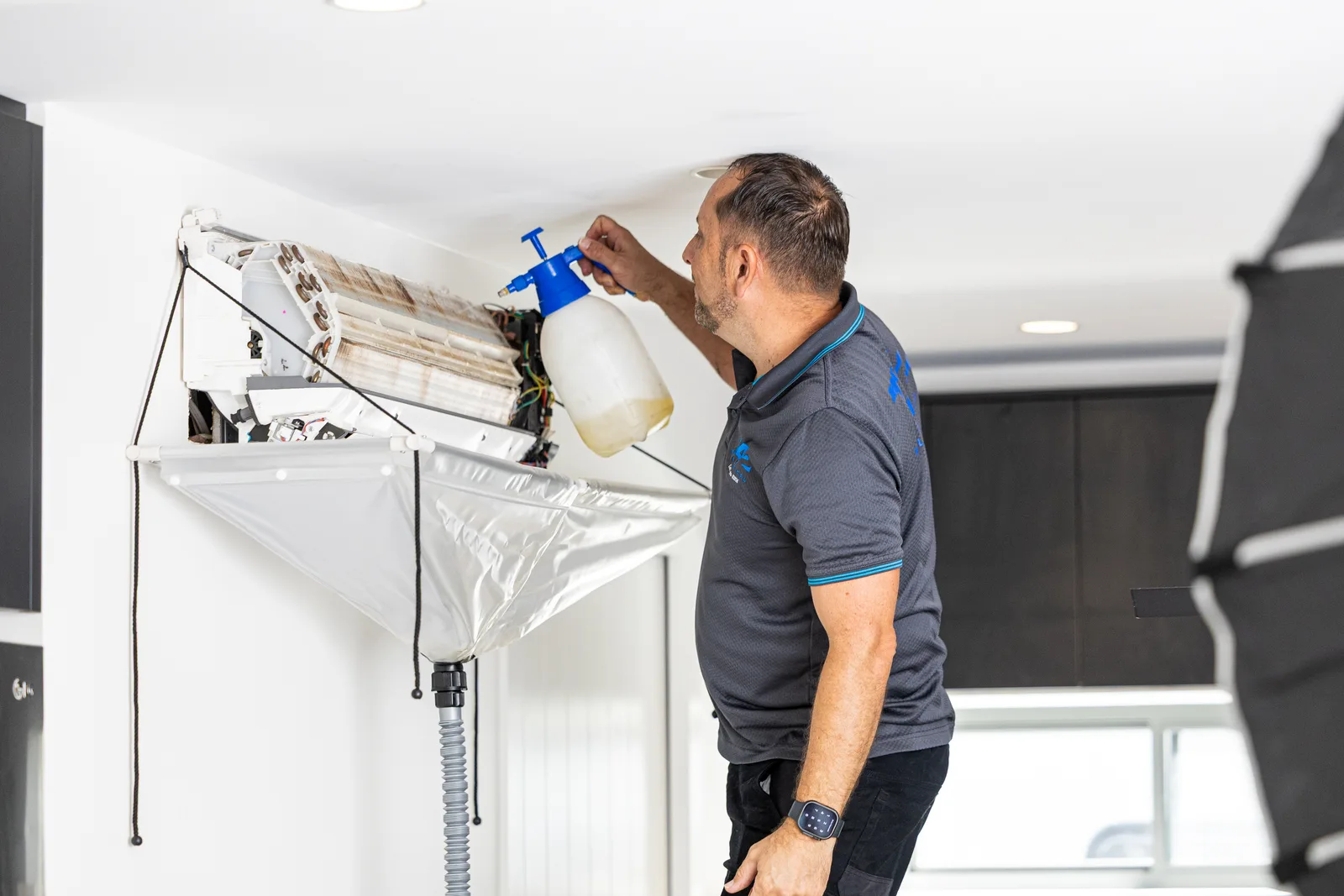
Common Causes of an Aircon Leaking Water in Bundall Homes
A blocked or algae-filled drain line
The most common cause by far. Humid Gold Coast air near the Nerang River encourages algae growth inside the drain line, eventually blocking it so condensate backs up and overflows.
A dirty filter choking airflow
A clogged filter restricts airflow over the coil, causing it to over-condense or ice up. When the ice melts, it produces far more water than the drip tray can handle.
A frozen coil that has started to melt
If the coil has iced up from low refrigerant or poor airflow, the meltwater often overwhelms the tray. This usually means there is a second fault sitting behind the leak.
Poor install fall or a full drip tray
Older canal-front installs around Isle of Capri can have a shallow drain fall, and a tray that fills faster than it drains will eventually spill over the edge.
Is a Leaking Aircon Urgent?
A small amount of condensation is normal, but any dripping, staining, or pooling means water is going somewhere it should not. It is not usually an emergency, but it should be checked before it damages a wall or ceiling.
- You can safely check the filter is clean and confirm nothing is blocking the indoor unit's drain outlet
- Clearing the internal drain line and inspecting the coil is a technician's job, not a DIY task
- Water staining a wall or ceiling should be checked promptly to avoid ongoing damage
- A sudden, heavy leak alongside ice on the unit points to a second fault needing diagnosis
What To Check Before We Arrive
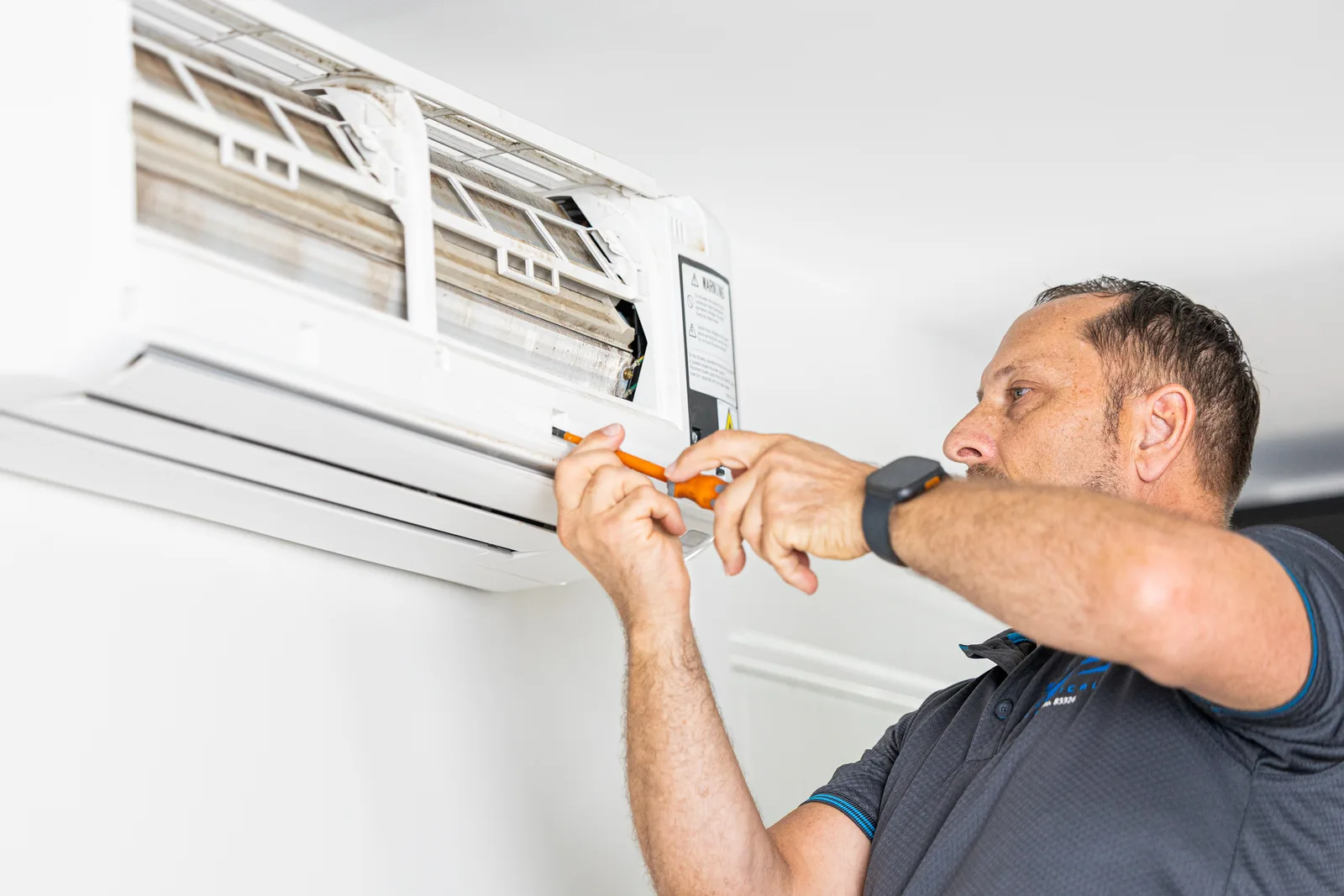
A few safe checks can help us understand the fault before your technician arrives:
- Turn the unit off and check the filter is clean, replacing it if it is choked with dust.
- Look at the indoor unit for visible ice on the coil or pipework.
- Check whether the drip tray or drain outlet looks blocked or overflowing from the outside.
- Place a towel or container under the leak to protect flooring until we arrive.
- Call an ARC-certified technician (Lic #83326, ARC #L160535) to clear the drain or fix the fault.

When To Call an Aircon Technician for a Leak in Bundall
- Water is running down the wall, the ceiling, or pooling on the floor
- The leak keeps returning after you have cleaned the filter
- There is visible ice on the indoor coil alongside the leak
- The drip tray or drain line looks blocked from the outside
- The leak is staining plasterboard, timber, or flooring
Any of these in your Bundall home is worth booking in promptly. We respond same-day where availability allows, with clear pricing before we start. See our air conditioning repairs and air conditioning cleaning.
How it works
How We Fix an Aircon Leak in Bundall
Fault Finding
We check the drain line, drip tray, filter, and coil condition to work out exactly where the water is coming from and why.
Upfront Quote
Once we know the cause, you get clear pricing before we start, with every option explained plainly before any work begins.
The Repair or Clean
If the drain line or coil is dirty we recommend an air conditioning clean, and if there is a mechanical fault we repair it under our licence.
Testing & Cooling Check
Before we leave, we run the system and confirm the drain is clear and the unit is cooling and draining properly.
Why This Is Common in Bundall Homes
Bundall's humid, low-lying position near the Nerang River and canal system keeps condensate drain lines wet year-round, encouraging algae growth. Homes near Broadbeach Waters face the same drainage strain.
Leaking Aircon and Related Faults Across Bundall
A leaking aircon often shows up alongside icing up, a bad smell, or poor cooling. We fix all of these across Bundall, Carrara, and Surfers Paradise, for both split system and ducted setups.

Air Conditioner Leaking Water in Bundall? Book a Technician Today
Call (07) 5661 9543 for same-day and emergency service. We're ARC-certified with 300+ five-star reviews and clear pricing before we start, and we'll find the fault and stop the leak properly. Get in touch today.
Learn more about Air Conditioning Bundall and the other common aircon problems we diagnose and fix.
Common questions
Air Conditioner Leaking Water FAQs
Water leaks are one of the most common aircon calls we get across Bundall. Here are the questions homeowners ask most when they spot a drip or a wet patch.
Why is water leaking from my air conditioner?
Most leaks come from a blocked or algae-filled drain line, a dirty filter causing the coil to over-condense, or a frozen coil that melts and overflows the drip tray.
What causes an air conditioner to drip water inside?
A blocked condensate drain is the most common cause, followed by a full or cracked drip tray, poor installation fall, or a dirty filter restricting airflow over the coil.
Can I fix a leaking air conditioner myself?
You can safely clean or replace the filter and check nothing is blocking the indoor unit. Clearing the drain line internally and coil work are jobs for a licensed technician.
Do I need a technician for a leaking aircon, or is it just condensation?
A small amount of condensation is normal, but any dripping, pooling, or staining on the wall or ceiling needs a proper diagnosis from a technician.
How much does it cost to fix a leaking air conditioner?
It depends on the cause, whether it is a drain clear, a tray repair, or a coil clean. We give clear pricing before we start, with no surprises.
Does humidity cause aircon drain lines to block in Bundall homes?
Yes. The humid air near the Nerang River encourages algae growth in drain lines, and blocked lines are one of the most common leak causes we see locally.